How Launch Tools Handle ECU Programming and Coding
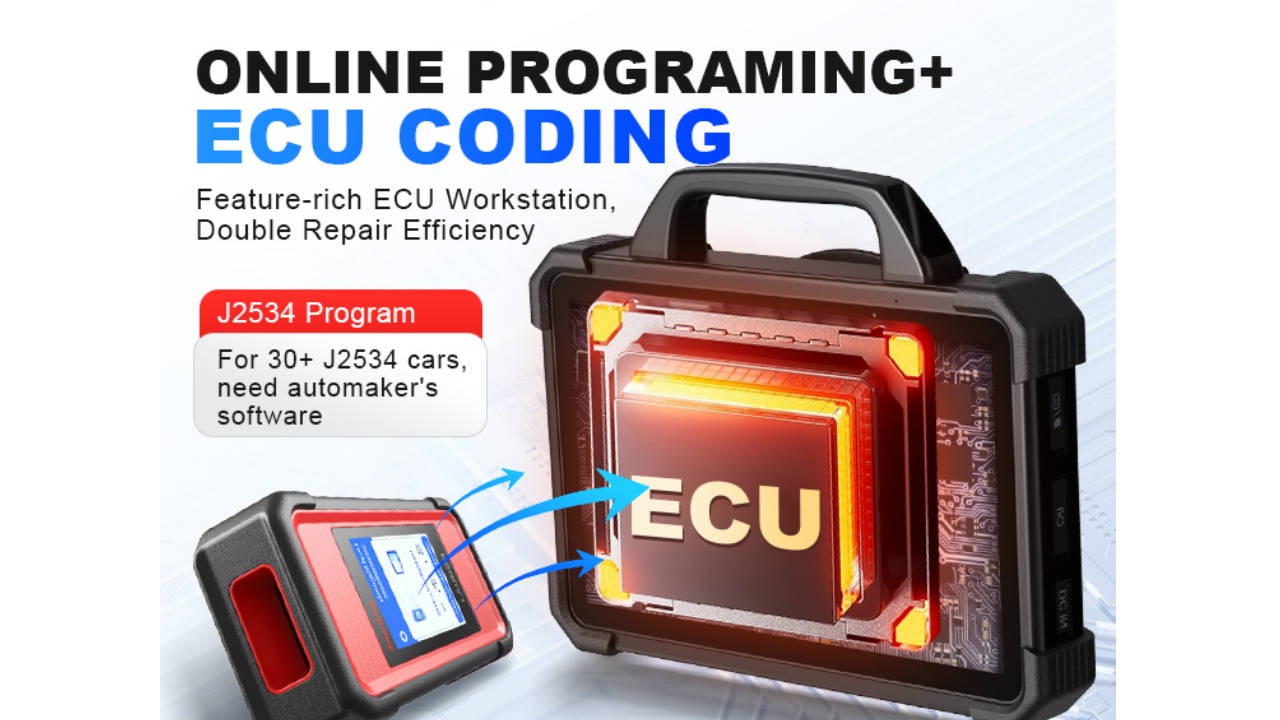
Contemporary cars are highly dependent on electronic control units or ECUs to control all the activities of the car, including the engine and safety system, among others. Proper launch ecu programming and coding are required when these units need to be updated, repaired, or replaced. Launch X431 equipment, especially the PAD VII 7 Elite, is manufactured to process such jobs with efficient ease. They are utilized by professional mechanics in diagnosing problems, performing software updates, and making sure that the vehicles work according to plan. LAUNCH also offers these packages preconfigured and ready to use, allowing workshops to save time on setup and ensure consistency across vehicles.
Pass-Thru ECU Programming
Pass-thru tools provided by the Launch scanners are SmartLink CVI boxes that can be used directly to interface with OEM software. This design enables the replacement of existing ECU software or firmware, programming of new modules, and correcting software-controlled problems using expensive factory scanners. The pass-thru feature serves the brands BMW, Mercedes-Benz, Porsche, and the VAG group. LAUNCH makes sure that the programming functionality is well-tested and can be used with various protocols, thus allowing the technicians to work with a great variety of vehicles without doubts.
ECU Coding Explained
In addition to programming, coding enables mechanics to program and fit ECUs to particular parts. For example, once an airbag module is replaced, the tool can turn it on to communicate properly with the car’s systems. Equally, the ECU has additional features that can be turned on or off without impairing overall functionality. LAUNCH provides the software with these coding features already and gives instructions to minimize the risk of mistakes in making the critical operations, and it will be safer for the mechanic and the car.
Protocol and Vehicle Support
PAD VII Elite supports many diagnostic software, such as CAN, CAN-FD, DOIP, J2534, RP1210, and D-PDU. This wide compatibility enables it to deal with commercial trucks as well as passenger cars. It has a coverage of Europe, the U.S., and Asia, and has more than 110 supported brands. LAUNCH keeps the software up to date, so workshops can handle new models as they are introduced to the market. The tool is regularly updated to be relevant in the current vehicle diagnostics and programming requirements.
Active Testing During Coding
Launch tools offer bidirectional control, which lets mechanics test individual components while coding ECUs. Windows, lights, injectors, and throttle actuators can be activated to confirm correct operation. This active testing identifies issues that might not be obvious through simple diagnostics. LAUNCH ensures that these functions are calibrated and safe to use, giving technicians the confidence to perform active tests on sensitive electronics without damaging the system.
Component Matching
After replacing an ECU or related component, matching is essential to maintain proper functionality. Launch tools can rematch control modules, ensuring the system recognizes the new parts. This includes modules for ABS, airbags, and transmission systems. LAUNCH preconfigures these matching functions so mechanics can complete replacements quickly and reliably, avoiding time-consuming trial-and-error procedures.
Online Calibration and Parameterization
Some vehicle systems require online access to perform calibrations or parameter settings. Launch devices can connect to OEM servers for these operations, updating module parameters or retrieving login codes for coding. Online calibration ensures that features like ADAS systems or advanced safety functions are set correctly. LAUNCH packages include clear instructions for accessing these online services, helping workshops maintain proper vehicle performance while following manufacturer requirements.
Topology Mapping
Launch tools feature a topology mapping function that visually represents the vehicle’s network of ECUs. Mechanics can see how modules communicate, which simplifies troubleshooting complex issues. This is particularly useful when multiple systems interact, such as stability control and engine management. LAUNCH ensures that the topology mapping is accurate and easy to interpret, saving time during diagnostic and programming tasks.
Extended Functions
Beyond programming and coding, Launch scanners support over 60 special functions, including injector coding, throttle adaptation, DPF regeneration, and battery resets. These features complement ECU work by ensuring that all related systems operate correctly after programming or coding. LAUNCH provides preloaded instructions and tutorials for these extended functions, allowing mechanics to apply them safely and effectively.
Conclusion
Launch X431 tools handle ECU programming and coding with a combination of pass-thru access, coding capabilities, active testing, and online calibration. Their broad protocol support and vehicle coverage make them versatile for professional workshops. LAUNCH’s preconfigured packages, regular updates, and guidance enhance usability, safety, and reliability. By integrating these features, mechanics can perform ECU-related work more efficiently, reduce errors, and maintain the performance of modern vehicles across a variety of brands and systems.